Showing posts with label Captain Bill Palmer. Show all posts

Thursday, August 27, 2015

Explore World War II Sunken Wrecks on Live TV


Did you know that one of the last battles of World War II happened just seven miles off the coast of Block Island?  The story was featured in a documentary we aired in December, Last Voyage of U-853


Now, for one week in September, the remnants of the battle will be explored. A team of University of Rhode Island oceanographers, engineers and students will spend four days in September investigating the underwater remains of a German U-boat with a state-of-the-art remotely operated vehicle (ROV) and HD cameras. Scientists, divers, archaeologists associated with the Inner Space Center and Research Vessel (R/V) Endeavor are making history, and we want you there with us.

Rhode Island PBS is proud and excited to partner with the oceanography scientists at the University of Rhode Island to bring live coverage of the R/V Endeavor's dives as the crew explores shipwrecks off the Rhode Island coast. On Thursday, Friday, and Saturday, September 3-5, we will carry the live feed three times a day: 11 a.m. and 7 p.m. on Rhode Island PBS (digital 36.1), and at 1 p.m. on Learn (digital 36.2)


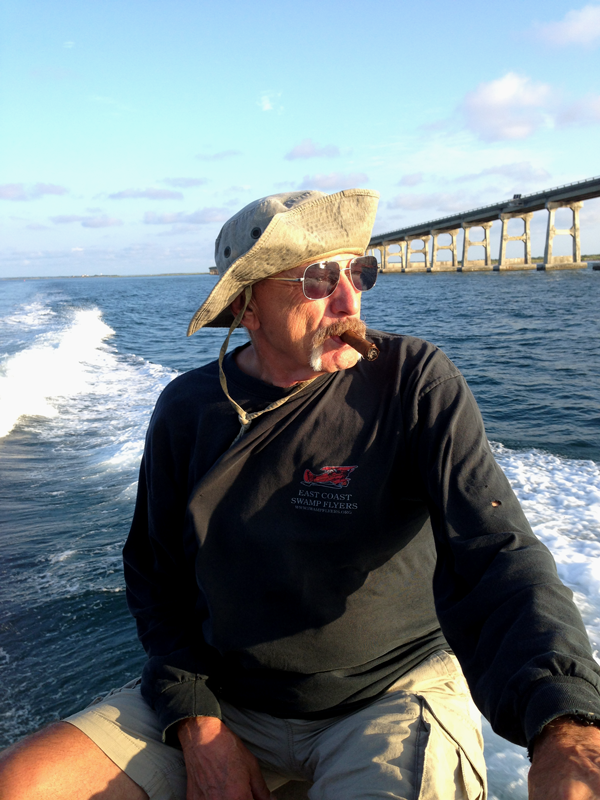
Each visit will be about 30 minutes long (regular programming will be preempted) and include interviews with participating experts, historical footage, and highlights from the previous day’s underwater investigations. The 7 p.m. program will broadcast live images of the wrecks from the remotely operated vehicles, with commentary from the scientists, archaeologists and scuba divers knowledgeable about the site. Captain Bill Palmer, who has explored the wreck and was featured in the documentary is expected to be on hand, too, during the three days of dives. 


The full expedition spans Sept. 2 to 6. Working aboard Endeavor, scientists and historians will examine the health of the wrecked submarine U-853, create a high-definition map of the site, and investigate the marine life around the sunken vessel.

“This is a great opportunity for school classes, amateur historians and the general public to learn the intriguing history of U-boat 853 and go behind the scenes of an oceanographic expedition,” said Dwight Coleman, director of the URI Inner Space Center who will lead the project with URI archaeological oceanographer Michael Brennan.

U-853 torpedoed the freighter S.S. Black Point on May 4, 1945 while the freighter was carrying coal to Boston. A day later the German submarine was sunk by depth charges deployed by the Coast Guard frigate Moberly and Navy destroyer Atherton. Located in waters about 130 feet deep, the wrecks of the U-boat and Black Point are now popular scuba diving sites. Both will be visited during the URI expedition.

For those who would like to see more of the work being done, cameras located throughout the ship and on underwater remotely operated vehicles will stream live images to the URI Inner Space Center throughout the five days of the investigation. The public can tune in at any time for free at www.innerspacecenter.org/riwrecks.


The expedition is funded by the Rhode Island Endeavor Program, a state-funded effort to provide URI researchers and local educators with access to the scientific research and educational capabilities of an ocean-going research vessel. Teachers Tiffany Risch of Coventry High School and Shannon Donovan of Scituate High School will be aboard ship to observe and assist in all aspects of the expedition and participate in live chats with school classes.

Among the others participating in the event will be Steven Licht, URI assistant professor of ocean engineering, and his graduate student Jordan Kirby, who will run the remotely operated vehicles and test a new robotic arm they are developing; URI Professors Thomas Rossby and Godi Fischer, who will conduct several underwater acoustics tests of a device they have invented; and Capt. Rich Sanders, a professor at the U.S. Coast Guard Academy, who studies the degradation of shipwreck sites to assess their risk to the environment.

Be sure to tune in for this rare opportunity. And spread the word! Share this information with your children, teachers you may know, as well as anyone with an interest in maritime history and history-making technology!

For more information on this and other expeditions, visit the Graduate School of Oceanography (GSO) Website, and check out the amazing innerspace center, too.
Wednesday, December 17, 2014

Last Voyage of U-853


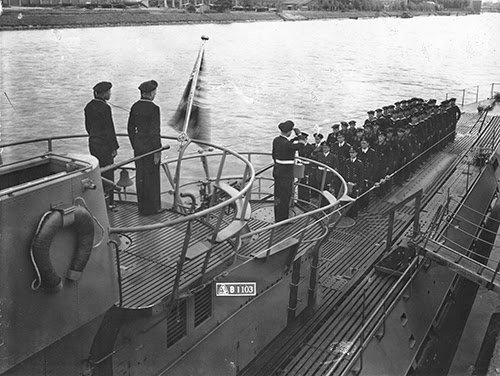
On May 5, 1945, just days before Germany surrendered in World War II, the U.S. merchant ship S.S. Black Point was steaming from Newport News Virginia to Weymouth, Massachusetts. Suddenly, German U-boat U-853, attacked and torpedoed the Black Point just a few miles off the coast of Rhode Island. The Black Point sank in minutes, taking 12 men to their deaths; 34 men were rescued.

The incident left many unanswered questions. One man, Captain Bill Palmer, a former Army paratrooper, Coast Guard licensed captain, and deep sea explorer, has been searching for answers for more than 30 years. His interest in the history of the U-853 became the subject of the book he authored entitled, The Last Battle of the Atlantic. Palmer partnered with award-winning editor and videographer Gregory Pettys of Westerly, Rhode Island, to produce the documentary, Last Voyage of the U-853. The documentary premieres on Rhode Island PBS Sunday, December 28 at 6 p.m. as part of Rhode Island Stories.

There are many mysteries surrounding the U-853, questions that drive Captain Palmer’s exploration. Why did the U-853’s young Captain Helmut Frömsdorf attack and sink the Black Point instead of surrendering as ordered? What was the U-853’s mission? Did she carry secret weapons as many at the time thought, or gold and mercury as some surmised? Why did she attack against orders in less than 200 feet of water and only a few miles from a US destroyer base? After the attack, why not try to escape the area at flank speed?

For U-853, not escaping was a fateful decision. It would be about an hour before the first of the U.S. warships could get there, but even then the sub was still hugging the bottom only eight miles from where the Black Point went down. A total of 11 Navy and Coast Guard ships arrived and immediately set up a barrier force, while initiating a sweep search with echo ranging that started at the northern tip of Block Island. The U-853 was eventually located and destroyed, killing the 54 men aboard.

Last Voyage of the U-853 chronicles some of Captain Palmer’s undersea exploration of the sunken wreck. Captain Palmer is searching the interior of the U-boat to try and find the log book. Finding the log could help solve many of the mysteries surrounding the U-853. Captain Palmer knows that navy divers never found it back in 1945, partly due to the danger from unexploded depth charges surrounding the U-853. It’s been estimated that more than 15 tons of explosives were used to sink the submarine and at least two men have died in attempts to explore the wreck, so the dive is not without danger.

“It’s taken a couple of years to put the story together but it was a great experience,” said Mr. Pettys. “When Captain Palmer goes inside the U-boat over 130 feet down and you see remains of some of the crewmen who went down with the ship, it’s really incredible footage,” he said.

“I cannot understand why Captain Frömsdorf torpedoed the Black Point one day before the war ended,” Captain Palmer mused. Palmer quotes from the account of Hans Gerbler, the radio operator on the U-505, who felt Frömsdorf was young, ambitious, and put his crew at great risk for his own personal gain. “‘I remember what the first commander of the U-853 said to Frömsdorf before we left. They are all good boys, make sure you bring them home.’ And here they sit to this day, in 130 feet of water off the coast of Rhode Island, waiting to go home,” Palmer concluded.

After the premiere on December 28, Last Voyage of the U-853 will encore on WSBE Rhode Island PBS (digital 36.1) on December 29 at 10 p.m., December 30 at 4 a.m., December 31 at 2:30 a.m., January 2 at 4 a.m., and January 3 at noon and 11 p.m. The documentary will also air on WSBE Learn (digital 36.2) on December 30 at 8 p.m., December 31 at 3 a.m., January 1 at midnight, and January 4 at 11 p.m.


About Captain Bill Palmer
Captain Palmer learned to dive after the Vietnam War. After leaving the army with $300 dollars in his pocket he bought some dive gear and a paperback book at Caldors on how to dive. He is now recognized as an expert wreck diver. Captain Palmer has lectured at numerous colleges and universities, including the United States Coast Guard Academy. Captain Palmer’s awar-winning undersea video work has been seen on many major television networks. Recently, Captain Palmer was interviewed by director Peter Weir (Master and Commander) about his role in the book Shadow Divers, soon to be made into a major motion picture.

About Gregory Pettys and Pettys Productions
Since 1987 Pettys Productions has provided award winning creative solutions to broadcast and corporate clients around the world. Pettys Productions specializes in documentary style productions for major scientific and pharmaceutical corporations.

About Rhode Island PBS
WSBE Rhode Island PBS is operated by the Rhode Island PBS Foundation, a non-profit 501(c)(3) organization, established in 1987 as a public charity to raise funds and provide support services for Rhode Island’s public television station. WSBE-DT is a viewer-supported member of the PBS network of public broadcasting stations, and transmits on three channels: Rhode Island PBS (digital 36.1), Learn (digital 36.2), and Spanish-language programming on Vme (36.3). Committed to lifelong learning since 1967, WSBE Rhode Island PBS uses the power of noncommercial media to educate, engage, enrich, inspire, and entertain viewers of all ages in Rhode Island, southeastern Massachusetts, and eastern Connecticut. For more information about the programs and education services at WSBE, visit www.ripbs.org.

WSBE Rhode Island PBS transmits standard-definition (SD) and high-definition (HD) programming over the air on digital 36.1; on RI cable: Cox 08 / 1008HD, Verizon FiOS 08 / 508HD, and Full Channel 08; on MA cable: Comcast 819HD and Verizon FiOS 18 / 518HD; on satellite: DirecTV 36, Dish Network 36.

WSBE Learn transmits over the air on digital 36.2; in Rhode Island on Cox 808; Verizon FiOS 478; Full Channel 89; and in Massachusetts on Comcast 294 or 312.